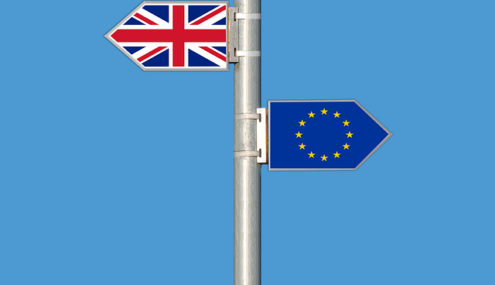
Brexit UK Comparable Marks – EU Use Will No Longer Count
From 31st December 2025, use in the EU will not support a UK comparable trade...
Read more
The EU trade mark opposition system plays a central role in protecting brand identity across the 27 member states of European Union. For UK businesses operating in a post-Brexit environment, understanding this process has become increasingly important. Here we provide an overview of the EU trade mark (EUTM) opposition procedure, highlighting its practical operation and its main distinctions from the UK opposition regime.
An EU trade mark opposition is a formal mechanism through which third parties can object to the registration of a European Union (EUTM) application.
The opposition must rely on at least one earlier right based within or across the EU and must be lodged with the European Union Intellectual Property Office (EUIPO) in accordance with Article 8 of the EU Trade Mark Regulation (EUTMR).
Since an EUTM is a unitary right and covers all the EU member states simultaneously, an opposition outcome can have pan-European implications.
Following ‘Brexit’ and the exit of the UK from the European Union, UK rights can no longer form the basis of an EU opposition.
Reliance must therefore be placed upon an earlier EUTM application or registration and/or any national EU member state trade mark rights.
An opposition must be filed within three months of the contested application’s publication in the EU Trade Marks Bulletin. This period is strictly non-extendable.
An admissible opposition requires submission of the opponent’s details, identification of the earlier mark(s) or right(s) relied upon (including registration numbers and relevant goods or services), specification of the grounds for opposition and identification of the contested application.
Payment of the prescribed opposition fee (currently €320 at the time of writing) must also be made at filing. There is no requirement to provide a Power of Attorney or any formal documentation, which simplifies the initial procedural step.
The most frequent basis for opposition is an allegation of ‘likelihood of confusion’, where the contested mark is alleged to be identical or similar to an opponent’s earlier right and covering the identical or similar goods or services.
As well as the identity between marks and goods, other recognised grounds may take into account the reputation of an earlier mark that is well-known, non-registered marks or signs of more than local significance, unauthorised filings by agents or representatives and conflicts with designations of origin or geographical indications.
An opposition can rely on several earlier rights provided they stand under the same opponent legal entity and multiple grounds of opposition may be pursued in a single action.
After submission, the EUIPO will review the opposition formalities for admissibility.
Once accepted, both parties are notified of the action and the process begins with a two-month ‘cooling-off’ period designed to encourage settlement.
This period can be extended by mutual consent for up to 22 months. If no settlement is achieved during the cooling-off period the case will then enter the adversarial phase.
At that stage, the opponent is set a period of two months to file facts and submissions in the form of evidence and legal argument to support its case.
The applicant then has its own period of two months to respond.
Where any earlier right relied upon is over five years old, the applicant may require the opponent to prove that the mark (or marks) have been put to genuine use in the territory of protection.
Failure to adequately do so would result in the earlier right being later disregarded as a basis for the opposition.
Occasionally, it may be necessary for the EUIPO to request a further round of submissions from the parties. This can often happen in complex cases.
The adversarial rounds are primarily handled through a written submissions process, ahead of a decision issued in writing.
Generally, it can take at least 8-12 months for the process to complete, but often this will be longer depending on the complexity of the case and the number of time extensions requested by the parties involved.
When proof of use is requested, the opponent must demonstrate genuine use of the earlier mark relied upon in the EU within the five-year period preceding the date of application (or on the date of priority) of the contested application.
Precisely what constitutes use in the ‘EU’ has been the subject of a large body of case law over the years, but suffice to say the use must be in a ‘significant’ part of the EU to qualify.
The definition of ‘significant’ will depend on several factors, such as the goods or services at issue and how specialist (or mundane) they may be.
To show this use of an earlier mark, the opponent must file documentary evidence in the form of invoices, catalogues, advertisements, promotions, market share reports etc. that show where, how and on what scale the mark has been used.
Any assertions made by an opponent which are unsupported by documentation will usually be deemed insufficient.
The EUIPO fundamentally requires that all use evidence be clear, consistent and contemporaneous.
After the exchange of submissions and evidence, the EUIPO will issue its first instance written decision.
The losing party will almost always be ordered to pay costs to the counterparty, but a cost award payment is not legally enforceable.
Indeed, a cost award is usually set for a nominal amount and almost never fully compensates a successful party’s cost outlay throughout the opposition proceedings.
Either party may appeal to the EUIPO Board of Appeal within two months of notification of the opposition decision.
Subsequent appeals can be made to the General Court of the European Union, and under exceptional circumstances, to the Court of Justice of the European Union.
Since EUTM protection no longer extends to the United Kingdom following Brexit, UK rights holders often pursue parallel trade mark filings in both the UK and EU where EU protection is considered important.
The net effect of this has seen a sharp rise in oppositions lodged in parallel in both jurisdictions for equivalent marks. However, there are key procedural differences between the UK and EU opposition systems.
For example, in the UK, the window for lodging an opposition is two months, extendible by one month; the EU system allows three months with no extension.
Additionally, the UK process tends to involve very structured rounds of evidence and can be more formal, including the issuance of preliminary indications on occasion following the filing of an opposition.
By contrast, the EU procedure is more flexible, offering longer timelines and an extended cooling-off period.
UK businesses should account for these differing timelines when challenging competitor applications and when considering further enforcement.
At the very least, any business that holds trade mark rights in the EU should closely monitor the EU Trade Marks Bulletin in order to identify conflicting applications promptly and to ensure oppositions are filed within the strict three-month window.
We would advise going even further than this, by setting up a dedicated trade mark watch service.
Engaging legal representatives experienced in EUIPO proceedings is advisable, as is assessing the commercial importance of the disputed mark before commencing proceedings.
Where an earlier right is over five years old, an opponent must consider whether that mark has been used sufficiently and could be relied upon if it is necessary at a later stage to show proof of use.
Since the EU process provides a very generous cooling-off period, this can often be used strategically to evaluate settlement opportunities or coexistence arrangements.
At other times, in a clear case where opposition is almost certain to succeed and settlement would not be in an opponent’s interests, the opponent can instead choose not to prolong the proceedings indefinitely and to push to the finish line as quickly as possible.
On receipt of a Notice of Opposition and challenge to their application, an applicant should take good note of the implications and seek professional advice.
It is vitally important to assess the strength of the opponent’s rights and the likely merits of the action. Not all oppositions are equal and many fail.
Where and when appropriate, and to test the validity of the opposition, an applicant should as a matter of course request that an opponent is put to proof of use of the earlier right (or rights) which are relied upon.
Also when defending, an applicant should endeavour to prepare persuasive arguments and file supporting evidence to show that its mark is distinguishable from the earlier right(s) and that there is demonstrably no likelihood of confusion.
The extension of a cooling-off period (needing the consent of both parties) can often provide a valuable opportunity to consider settlement if this aligns with commercial objectives.
An opponent will usually be receptive of a settlement proposal where its opposition success cannot be guaranteed or predicted. An opponent’s consent to an extension of the cooling-off period is usually a sign that it is not totally confident of success.
Key ‘takeaways’ for rights holders
The EUTM opposition system is a vital tool for enforcing earlier trade mark rights across the European Union, but the UK is no longer any part of this equation.
Successful opposition strategy requires proactive monitoring, strategic planning and adherence to procedural EUIPO guidelines.
For UK businesses, managing rights across both the UK and EU systems requires awareness of the procedural distinctions between the two systems and careful coordination. Each system is largely similar, but there are differences along the way.
Timely professional advice and a clear enforcement strategy can ensure efficient and cost-effective management of cross-border brand protection.
If your business is facing any EU trade mark difficulties (for example, your application is being challenged or you are keen to put a stop to your competitors’ transgressions) then talk to SH&P today for clear, straight to the point, friendly advice.
Need help with a trade mark matter in the European Union? Let's discuss.
Book a Consultation