
A Win Against TAT But No Bad Faith Here
UK Trade Mark Opposition Decision Rules in Favour of Relative Grounds But Not on Bad...
Read more
On 25th March 2025, Nyetimber Limited, a respected and prominent producer of English sparkling wine, initiated proceedings in the Intellectual Property Enterprise Court (IPEC) against Salcombe Distilling Co., alleging passing off. The dispute concerns the use by Salcombe of the stylised wording “Product of England” on its gin labels. Nyetimber alleges this use mimics the same term as it appears on its own labels.
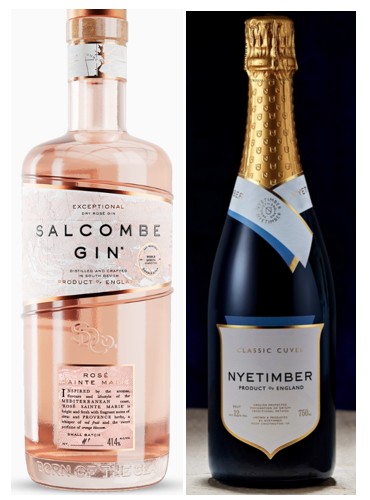
Nyetimber, which has produced English sparkling wine in the South Downs since 2006, has within its claim asserted longstanding market presence and brand recognition.
Salcombe Distilling Co., founded in 2016 and based in South Devon, produces gin products under the “Salcombe” name. The claim relates to the packaging of Salcombe’s “Start Point” and “Rosé Sainte Marie” gins, both of which bear the wording “Product of England”.
It is alleged by Nyetimber that this label – specifically the stylised presentation of the phrase “Product of England”— is being used by Salcombe in a manner which is deceptively similar to its own use of these words.
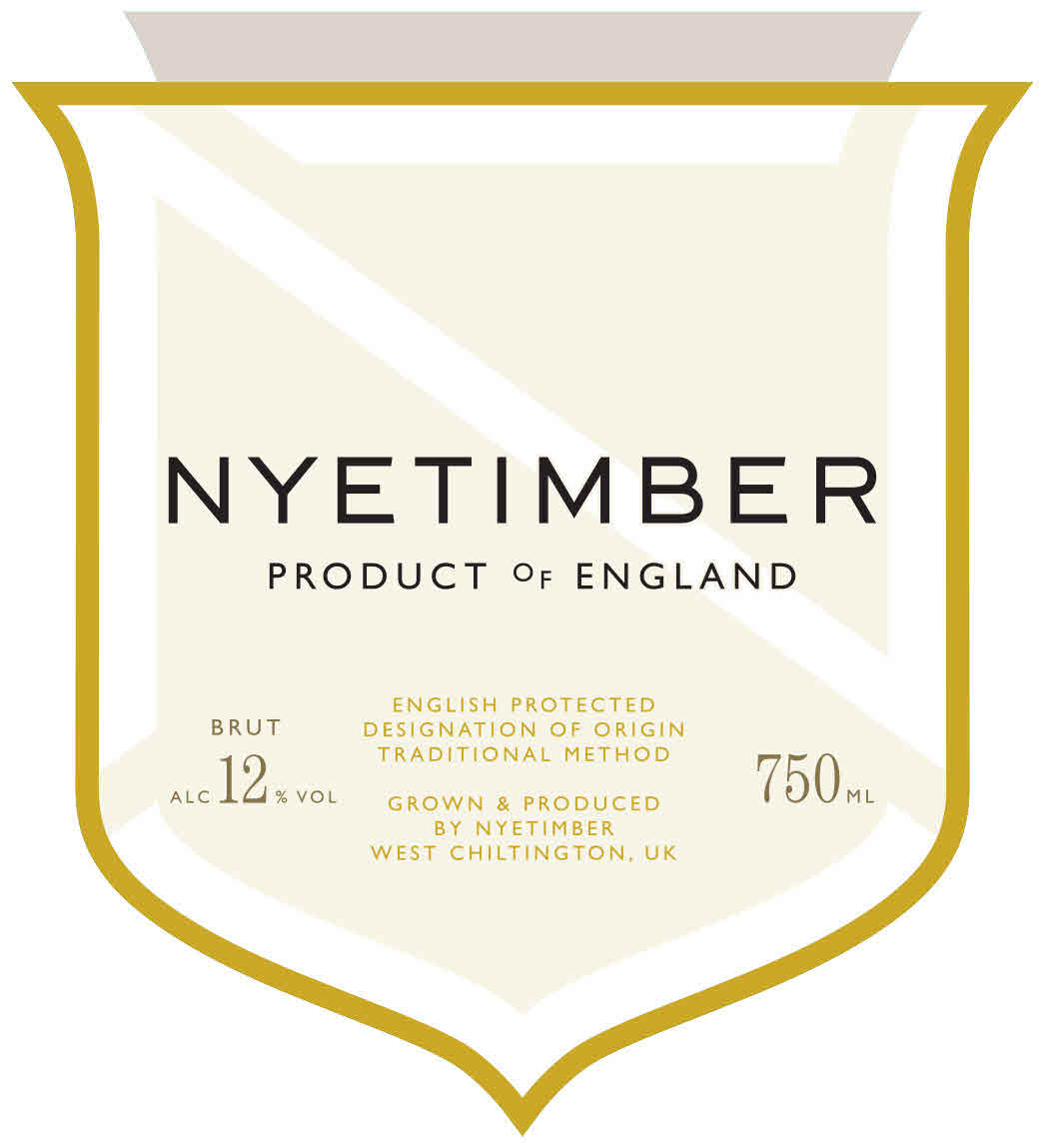
Specifically, the cases centres on the visual appearance of the word “OF” (the letters “O” and “F” being offset vertically).
Within the scope of its claim Nyetimber contends that this visual similarity is deliberate and designed to evoke an association with Nyetimber’s products, thereby capitalising on its goodwill and reputation in the premium alcohol sector.
The claim does not (and cannot) seek to prevent Salcombe from using the phrase “Product of England” per se, which is descriptive and not inherently protectable.
Rather, the objection lies in the stylisation of the phrase, which Nyetimber states is distinctive of its brand and has become associated in the minds of the public with its products.
Nyetimber holds a registered UK trade mark (No. UK00003396651) covering its labelling and stylisation elements. One of the elements in the registered series is shown below:
The tort of passing off requires a claimant to establish three key elements: (1) goodwill, (2) misrepresentation, and (3) damage. These elements were reaffirmed in Reckitt & Colman Products Ltd v Borden Inc [1990] 1 WLR 491, and this test stands as the benchmark in passing off disputes.
Nyetimber has asserted the existence of substantial goodwill in the UK sparkling wine market.
To succeed it will need to demonstrate that this goodwill attaches specifically to the design and stylisation of the “Product of England” wording on its labels (in the style shown above), rather than to the words themselves. This requires evidence of consumer recognition of the stylisation as a badge of origin.
The second limb – misrepresentation – is central to the dispute.
Nyetimber has argued that Salcombe’s adoption of a near-identical visual presentation of the “Product of England” wording is likely to deceive consumers into believing there is a connection between the two brands. According to the pleaded case, it is “inconceivable” that Salcombe’s design could have been created independently of Nyetimber’s influence. The claim alleges Salcombe’s intention was to take unfair advantage of Nyetimber’s reputation by inducing a false association in the minds of consumers.
Although the words “Product of England” are not proprietary and serve a descriptive function, stylised features may nonetheless be protectable if they have acquired distinctiveness. Under the Trade Marks Act 1994, s.3(1)(b)-(c), descriptive marks are generally excluded from registration unless they have acquired distinctiveness through use. Nyetimber has registered its label as a trade mark, but that label includes distinctive elements such as the word “NYTIMBER”. The words “Product of England” are taken to be outside of the protected scope.
The third element – damage – relates to the commercial harm caused or likely to be caused to the claimant’s goodwill.
Nyetimber contends that Salcombe’s use of a identical stylisation risks diluting the exclusivity of its branding and may cause economic loss through misattribution or diminution in brand value. The law does not require proof of actual damage but rather a likelihood of substantial damage arising from the misrepresentation.
If the Court is persuaded that Salcombe’s use of the stylised “Product of England” constitutes an “instrument of deception” it may find that passing off has occurred notwithstanding the descriptive nature of the phrase itself. However, Nyetimber must show that the specific presentation of this otherwise descriptive text has acquired distinctive character and functions as a source identifier.
This case underscores the nuanced position under UK law concerning descriptive phrases. While such terms are typically excluded from protection, stylised use may, over time, generate sufficient consumer recognition to attract common law or statutory protection. The question here is whether Nyetimber can persuade the Court that there is goodwill attached to the (admittedly) non-standard presentation of the lettering “Product of England”, as shown on the label above.
It is clear from the pleadings that Nyetimber’s strategy is not to monopolise the wording but to constrain its stylisation. This distinction may prove critical. Section 3 of the Trade Marks Act 1994 prohibits registration of marks that consist exclusively of descriptive signs. However, if stylisation is sufficiently distinctive to operate as a badge of origin, protection may follow.
In this regard, Salcombe’s ability to defend its design as independently conceived and insufficiently similar to mislead the average consumer will be central to the outcome. While Salcombe is fully entitled to describe its products as originating from England, any suggestion through evidence that the public will believe its products are affiliated with or endorsed by Nyetimber – expressly or by implication – may be fatal to its position.
Of particular importance will be the ability of Salcombe to convince the Court that it independently created the lettering style of “Product of England” and that others could freely do the same. It will have to argue the letter styling is not in any way indicative of trade origin.
For Nyetimber to succeed, it will need to produce strong evidence of reputation and stylisation-led brand recognition. Survey evidence, expert reports and marketing history may all be required to demonstrate the level of consumer recognition attached to the stylised wording.
Conversely, Salcombe is likely to argue that any resemblance is coincidental or driven by shared industry conventions. If the Court finds that consumers would not infer a connection between the parties, or that Salcombe’s stylisation does not in any way function as a source indicator, the passing off claim will fail on the grounds of insufficient misrepresentation or absence of damage.
A hearing date has yet to be set. The outcome may have broader implications for producers relying on stylised descriptive indicators to distinguish their goods, particularly in sectors where provenance and visual presentation play a key role in consumer perception.
Brand owners with concerns on the possible imitation of their branding (and especially where trade mark registration may be limited) should ensure consistent use of stylised elements and monitor the market for potential infringements. Where appropriate, passing off may offer a valuable remedy even in the absence of registered rights, but with the caveat that passing off claims are expensive to bring and pursue. Ultimate success will depend entirely on the evidence.
For guidance on protecting your business’s brand presentation and how to best prevent competitor imitation, contact SH&P and find out how we can help you put together an optimal strategy.
Posted: 22nd July 2025